Open-source personal agents in 2026: OpenClaw, Hermes Agent and four more, compared
· 6 min read
OpenClaw is an open-source personal agent: an assistant that lives in your chat apps and never sleeps. It turned that into a category, and ten months later about a dozen projects claim the same space. On 28 October 2026 I read the repositories and documentation of the ones that are open source and still moving. This is the short version for developers: six agents, what sets each one apart, and which fits what.
In brief
- Six projects are the real comparison. OpenClaw, Hermes Agent, Nanobot, ZeroClaw, NanoClaw and IronClaw are always-on agents. Pi is a building block under them, and NemoClaw is a wrapper around them.
- Two projects hold most of the attention. OpenClaw has 393,000 GitHub stars and Hermes Agent 254,000. The next one, Nanobot, has 50,000.
- Security is where they differ most. OpenClaw and Nanobot ship fast and ask you to harden. NanoClaw and IronClaw refuse to run un-isolated. Hermes Agent and ZeroClaw sit in between, with approvals.
- Memory comes in two camps. Four agents keep memory in Markdown files you can read and commit. ZeroClaw and IronClaw keep it in a database with vector search.
- All six read
SKILL.md, and two are also MCP servers. Only OpenClaw and Hermes Agent can act as a Model Context Protocol (MCP) server, which matters when you want other agents to drive yours.
Three layers, and one of them is the comparison
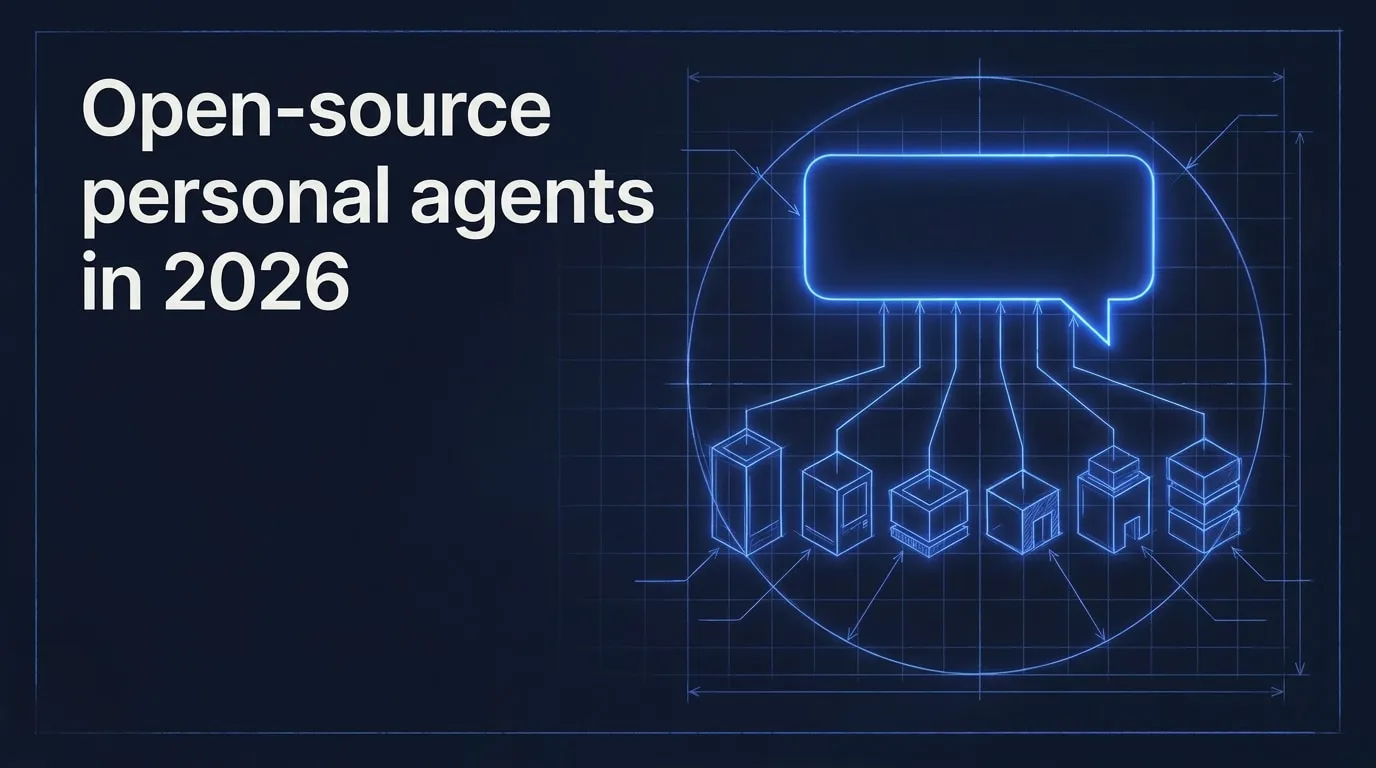
Not everything called a claw is the same kind of thing. The projects sit on three layers, and only the middle one holds the always-on assistants.
Pi is a minimal coding-agent harness: four tools, no channels, no memory, no permission system. OpenClaw adapted parts of it and still depends on its pi-tui package. It is something you build an agent on.
NemoClaw, with OpenShell, is NVIDIA’s policy and sandbox layer on the host. It wraps an agent: OpenClaw by default, and Hermes Agent is supported too.
The six agents
Hermes Agent is the oldest codebase, though OpenClaw went viral first. The other four started in early 2026, as reactions to OpenClaw.
| Agent | Language | Licence | Stars | First commit | Steward |
|---|---|---|---|---|---|
| OpenClaw | TypeScript | MIT | 393,000 | Nov 2025 | OpenClaw Foundation |
| Hermes Agent | Python | MIT | 254,000 | Jul 2025 | Nous Research, a company |
| Nanobot | Python | MIT | 50,000 | Feb 2026 | HKU Data Intelligence Lab |
| ZeroClaw | Rust | MIT or Apache-2.0 | 33,000 | Feb 2026 | A student-led community |
| NanoClaw | TypeScript | MIT | 31,000 | Jan 2026 | NanoCo, a company |
| IronClaw | Rust | MIT or Apache-2.0 | 12,700 | Feb 2026 | NEAR AI, a company |
Stars measure attention, not quality. The gap still tells you where most of the skills, plugins and bug reports will be.
Five wrote their own agent loop, one embeds one
OpenClaw, Hermes Agent, Nanobot, ZeroClaw and IronClaw each run their own agent loop. NanoClaw doesn’t write one: a host router passes messages to a Docker container per agent group, and the container runs the Claude Agent SDK.
For a builder, that leads to two practical points:
- Swapping the engine. OpenClaw and NanoClaw are designed for it, OpenClaw through pluggable harnesses and NanoClaw through provider skills.
- Reading the code. Hermes Agent and Nanobot are the easiest to read end to end. ZeroClaw and IronClaw are the heaviest, at about 1.2 to 1.4 million lines of Rust each, tests included.
Memory, skills and channels
The four Markdown-first agents keep memory as files you can cat, diff and commit. The two database-first agents give you pluggable stores and vector search instead.
| Agent | Memory | Writes its own skills | MCP | Channels | Import from OpenClaw |
|---|---|---|---|---|---|
| OpenClaw | Markdown files, with keyword and vector search in SQLite | Yes, versioned, with undo | Client and server | About 30 | No |
| Hermes Agent | Two small Markdown files with hard size caps, and full-text search over all sessions | Yes, with optional approval | Client and server | About 30 | Yes |
| Nanobot | Markdown files, tracked in Git | Yes | Client | About 19 | No |
| ZeroClaw | A database you choose: SQLite, Postgres, Qdrant and others | Opt-in | Client | About 30 | Memory only |
| NanoClaw | A tree of Markdown files, no database and no embeddings | Only when the operator asks | Client | About 19 | Yes |
| IronClaw | libSQL or Postgres with pgvector | No, it builds WebAssembly tools instead | Client, over HTTP only | 2 | No |
Hermes Agent’s memory is the design choice I found most interesting. Its MEMORY.md is capped at about 2,200 characters, so the agent has to curate what it keeps instead of hoarding.
IronClaw’s channel list shrank in its 1.0 release to Telegram and Slack, so check its feature parity page before you assume a channel is there. All six can run scheduled jobs.
Hermes Agent’s importer is the most complete: hermes import-agent openclaw brings over the identity file, memories, skills, allowlists and channel tokens.
Security and isolation
Security is the reason most of the alternatives exist, and the six fall into three groups.
| Agent | Out of the box | Sandbox | Credentials |
|---|---|---|---|
| OpenClaw | Sandbox off, built for one trusted operator | Docker, Podman, SSH, OpenShell, Crabbox | Sandboxes can run without the gateway’s credentials |
| Hermes Agent | Supervised: a model rates the risk of each command | Local, Docker, SSH, Modal, Daytona, Vercel Sandbox, Singularity | Environment stripped, credentials mounted read-only, writes to .ssh and .env blocked |
| Nanobot | Pairing codes and allowlists | bwrap on Linux, seatbelt on macOS, for the shell only | Not stated |
| ZeroClaw | Supervised | Landlock, Firejail, Bubblewrap, Seatbelt, Docker | The sandbox strips the parent’s secrets |
| NanoClaw | A Docker container per agent group, always | Docker | Agents never hold keys: a gateway injects them at request time, and the host won’t start without one |
| IronClaw | A WebAssembly sandbox for untrusted tools | wasmtime, Docker workers | Encrypted secrets, injected on the way out, with leak detection |
OpenClaw has about 647 published security advisories and Hermes Agent has none. Both numbers show how much scrutiny a project gets on the surface it has. OpenClaw’s count comes from a working disclosure process on a very large project, and it doesn’t have to mean worse code.
Which one fits what
Each of the six has one thing it does better than the others, so the pick follows from what matters most to you.
| If you want | Pick | Because |
|---|---|---|
| The default choice, with the most skills, channels and community | OpenClaw | 393,000 stars, its ClawHub skill registry, about 30 channels, MCP client and server |
| An agent that improves itself over time | Hermes Agent | Small curated memory, skills it manages itself, search over past sessions, a one-command import from OpenClaw |
| Isolation you can’t turn off by accident | NanoClaw | A Docker container per agent group, and a credential gateway it won’t start without |
| Sandboxed tools and a hosted option | IronClaw | WebAssembly sandbox, encrypted secrets, NEAR AI’s hosted Agent Hub |
| One binary on a Raspberry Pi or other small hardware | ZeroClaw | A single binary of 33 to 59 MiB, sandboxes from the operating system |
| A Python runtime you can read | Nanobot | About 144,000 lines, a Python SDK, a web UI and a terminal UI |
| A loop to embed in your own product | Pi | Four tools and a TypeScript SDK |
| Policy on top of an agent | NemoClaw and OpenShell | Apache-2.0, policy enforced at the kernel, credentials kept away from the agent |
What I left out
Checking each project changed this list a lot. These appear in other round-ups, and here is why they aren’t above:
- GoClaw, a Go reimplementation, is licensed CC BY-NC 4.0. That is non-commercial, so it isn’t open source.
- Vellum Assistant is MIT, but Vellum announced that the platform would shut down on 2 November 2026, and it no longer maintains the repository.
- TrustClaw is MIT, with no commits since June 2026.
- Agent Zero and Khoj are real projects in a different category: a Docker workbench for agents and a “second brain” for documents.
Method and caveats
- Stars, dates and features were read from each project’s GitHub page, README and documentation on 28 October 2026. GitHub’s API responses were cached and lagged by weeks, so I used the pages.
- I didn’t install or run any of the agents. A documented feature is not the same as one that works well.
- Codebase sizes are my own line counts on shallow clones, tests included, unless the project states a number.
- Channel counts are approximate, and “Not stated” means the project’s documentation doesn’t say.